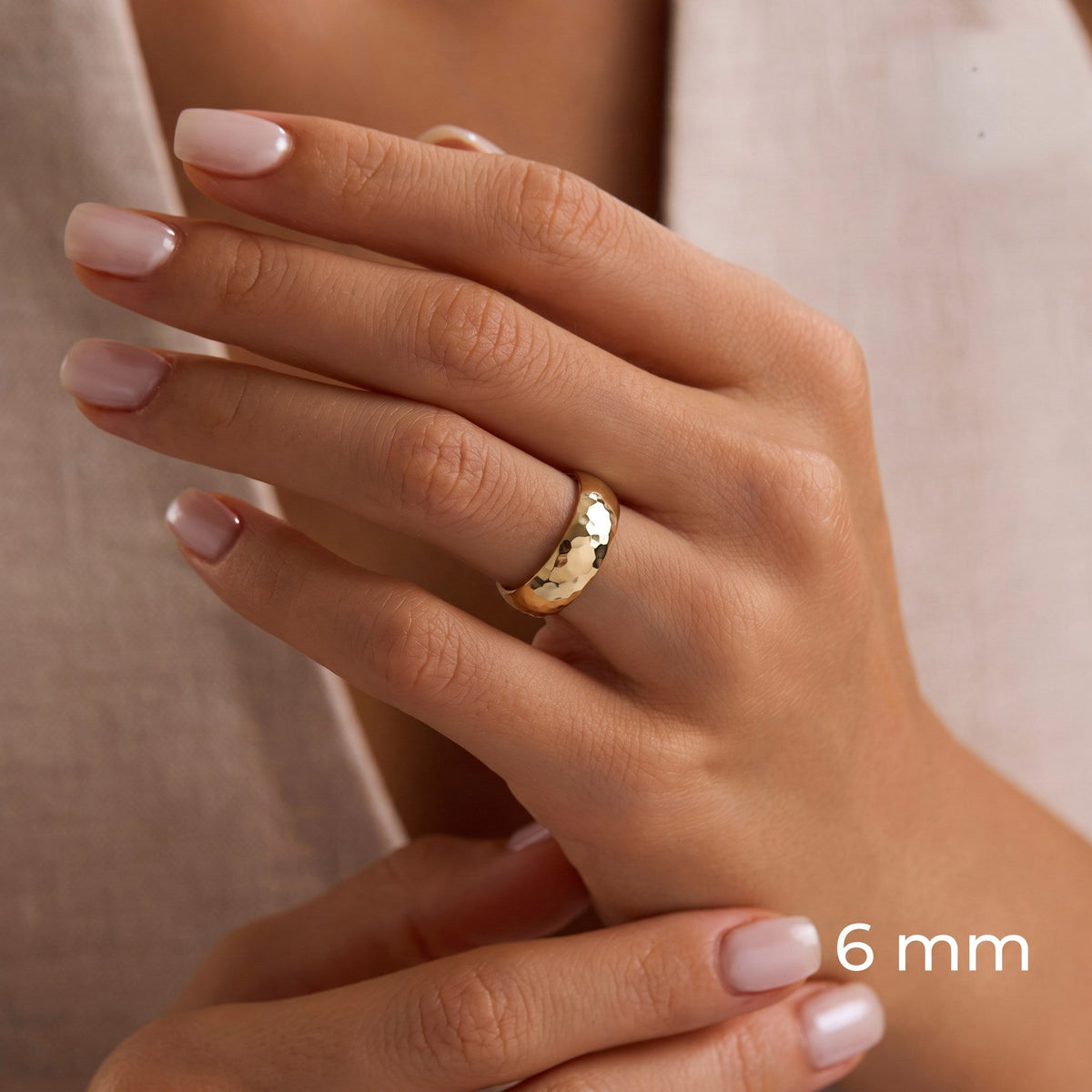
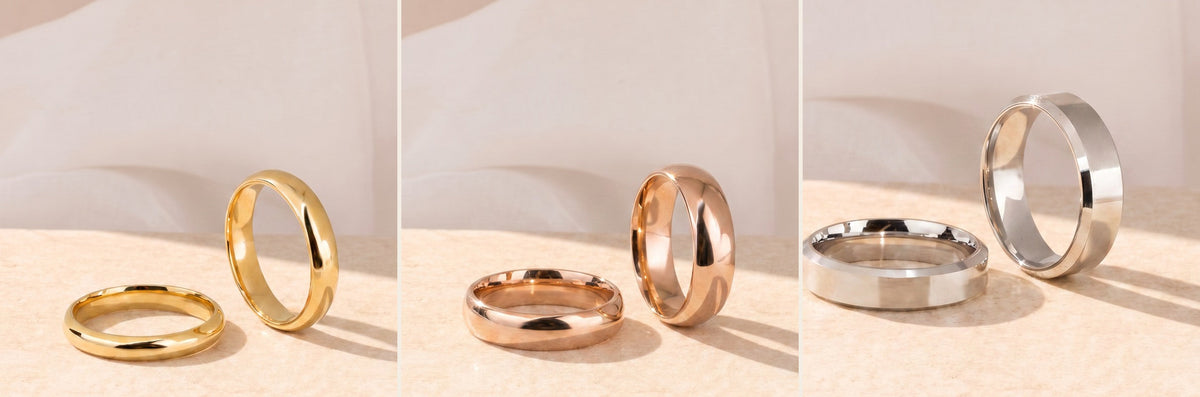
The karat (K) tells you how much of a piece of jewelry is pure gold. Pure gold is 24K, but it is too soft for everyday jewelry, so it is mixed with other metals for strength and color. The higher the karat, the more pure gold, the richer the color and the softer the metal.
Quick comparison
| Karat | Pure gold | Stamp | Color | Strength |
|---|---|---|---|---|
| 10K | 41.7% | 10K / 417 | Pale yellow | Hardest |
| 14K | 58.5% | 14K / 585 | Warm yellow | Very durable |
| 18K | 75% | 18K / 750 | Rich yellow | Softer |
| 22K | 91.6% | 22K / 916 | Deep yellow | Softest |
10K gold
10K is the hardest and most affordable karat. It resists scratches and dents well, which makes it practical for a band worn every day at work. Its color is a little paler than higher karats.
14K gold
14K is the most popular karat in the US. It has a warm gold color and is strong enough for daily wear, so it is our standard for chains, pendants, rings and earrings. Every piece stamped 14K / 585 is 58.5% pure gold. Read Can You Wear 14K Gold Every Day?
18K gold
18K has a richer, deeper yellow and feels luxurious. It is softer than 14K, so it shows scratches a little sooner, but with normal care it makes a beautiful wedding band.
22K gold
22K is the deepest, most golden color, popular for traditional wedding bands. It is the softest karat we offer, so it suits a classic band with a high polish. Our 22K bands come in the classic dome style.
Which karat should you choose?
- For everyday chains, pendants and rings: 14K.
- For a hard-wearing band on a budget: 10K.
- For a richer color: 18K.
- For the deepest traditional gold: 22K.
Whatever the karat, real solid gold is never plated or filled, so the color does not wear off. To compare solid gold with plated and filled jewelry, see 14K Solid Gold vs Gold-Filled vs Gold-Plated. For prices by karat, read How Much Does a Gold Wedding Band Cost?