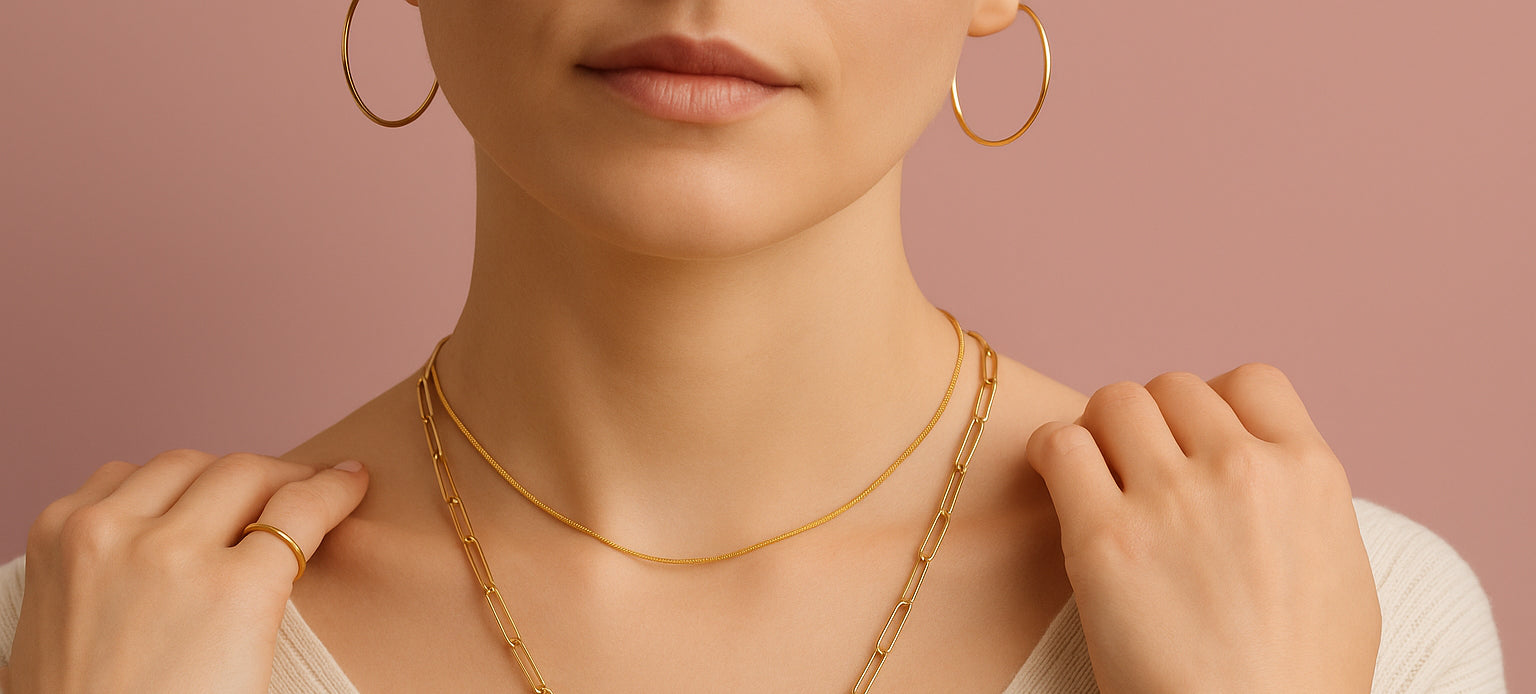


When you compare gold chains, length is only half of the picture. The other half is width: how thick the chain is, measured in millimeters. Width decides how delicate or bold a chain looks, how it feels, and what it pairs with. Here is how to choose.
What chain width means
Chain width is the thickness of the chain, measured across the links in millimeters (mm). A 1 mm chain is very fine, while a 5 mm chain is a substantial, noticeable chain.
Chain widths at a glance
| Width | Look | Good for |
|---|---|---|
| 1 to 1.5 mm | Dainty and fine | Wearing with a pendant, or as a subtle everyday chain |
| 2 to 3 mm | Everyday weight | Wearing alone or layering |
| 4 to 5 mm | Bold and noticeable | A statement chain worn on its own |
| 6 mm and wider | Statement | A strong look, often worn by itself |
Choosing a width for a pendant
A thinner chain, usually 1 to 2 mm, lets a pendant be the focus. Make sure the pendant’s loop can slide onto the chain you choose.
Choosing a width for layering
Mix widths for depth: a fine chain with a slightly wider one below it. Keep the lengths about two inches apart, as in our necklace length guide.
Width and size are separate
Width changes how a chain looks, but not the size you order. A thin bracelet and a wide bracelet fit the same wrist in the same size. For help with your size, see our Sizing Guide.
Width, weight and price
Wider chains contain more gold, so they weigh more and cost more. How a chain is built also matters: solid, hollow and semi-hollow links can look the same width but weigh and cost differently. Read our guide to solid, hollow and semi-hollow chains to learn more.
See widths side by side
Each of our chain style pages shows the widths we offer drawn to scale next to each other, so you can compare them. Start with our necklaces or bracelets, choose a style, and compare the widths.